
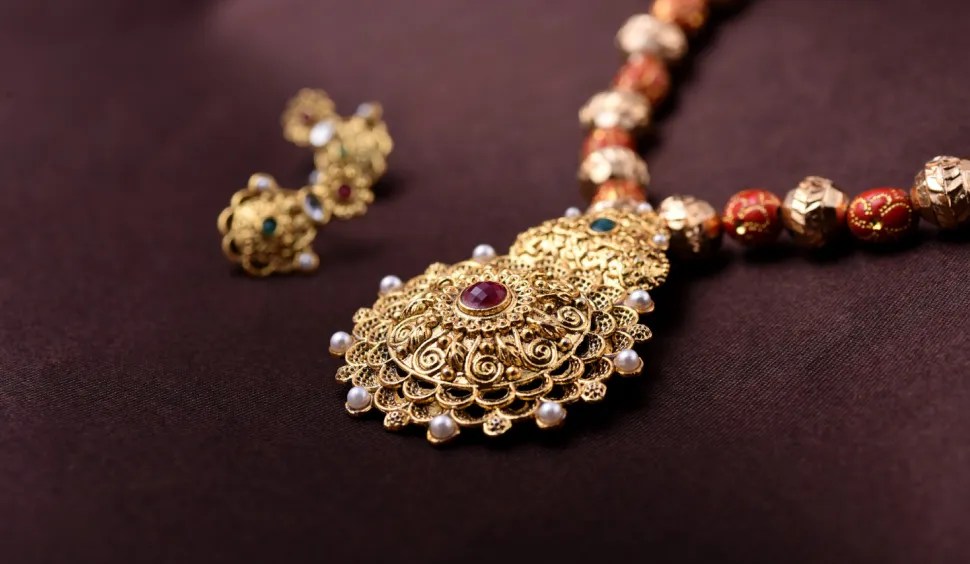
How To Recognise Pure Gold From Those With Impurities
What are some ways to tell if the gold jewellery you’re purchasing is actually pure or contains impurities?
Gold has long represented trust, tradition and timeless value in addition to being a metal. Can you really tell if your gold is pure in today’s market where imitation and inferior alloys are becoming more prevalent? Many buyers are frequently duped by glistening appearances not realizing that what they’re holding may not be authentic.
Every gold buyer should be able to identify pure gold; it’s not just for jewellers or specialists. Knowing the difference between real and impure gold can help you avoid disappointment and financial loss when swapping old gold, buying new jewellery or pledging ornaments.
Understand Hallmarks And Stamps
One of the most trustworthy methods to determine the purity of gold when purchasing is to look for hallmarks and stamps. Each piece of real gold jewellery has unique markings that guarantee its purity. India recognizes the Bureau of Indian Standards (BIS) Hallmark as an official mark. Typically this mark includes the information listed below:
- Government standards have been met by the gold as indicated by the BIS symbol.
- Karat value (e.g.14K, 18K, and 22K). ) – shows how pure the gold is.
- The Assaying and Hallmarking Centers identification number. The mark used to identify jewellers.
- These hallmarks ensure the purity and accurate value of the gold you have purchased. Untrustworthy transactions may result from purchasing gold without a hallmark. As a result when purchasing gold always look for hallmarks and stamps.
Acid Testing
One of the earliest and most accurate ways to determine the purity of gold is through acid testing. It entails utilizing a particular acidic liquid (typically nitric acid) to test the corrosion resistance of gold. A tiny piece of gold jewellery is polished and sprayed with acid as part of the test procedure.
24K pure gold is resistant to acid reactions and discoloration. However exposure to acid will cause impure gold to slightly discolor or stain. Because doing it at home can harm the gold this test is typically only carried out by qualified jewellers or assay facilities.
Magnet Test
It may surprise you to learn that genuine gold is not drawn to a magnet because it is a non-magnetic metal by nature. As a result the magnet test is an easy at-home way to determine the purity of gold. Bring a powerful magnet close to your gold jewellery to test it. If it attracts the magnet it is not pure gold rather it contains a mixture of iron nickel or another metal.
It is more likely that the gold is pure if there is no reaction to the magnet. This test does not however provide a 100% guarantee. Additionally some alloy metals might not be magnetic. As such the magnet test ought to be regarded as merely an initial examination. Always remember that having it tested by a qualified assay center and BIS Hallmark is the most dependable method.
Electronic Gold Test
One technique for precisely assessing the purity of gold using contemporary technology is electronic gold testing. This electrical resistance measuring device aids in quickly determining the karat value of gold (22K,18K etc. ). One of the most dependable testing techniques available today is this one which yields results without the use of acid or harm to the gold.
Fire Assay Method
The most precise and trustworthy method for determining the purity of gold is the fire assay test. To separate the other metals contained in a small sample of gold it is melted at a high temperature in this test. Because of this we are able to precisely ascertain the gold’s actual purity and karat value. Typically only assaying labs and BIS-approved facilities perform this test. As a result the most scientific results can be obtained using the fire assay test.
X-ray Fluorescence Test
A contemporary and scientific technique for precisely assessing the purity of gold is the X-ray fluorescence test. This test uses X-ray impulses to analyze the metallic components of gold jewellery. Without causing any harm to the gold or the instrument the results are instantaneous and offer efficient testing. The most dependable approach is frequently employed by labs and jewellers with BIS accreditation.
Ultrasonic Test
One of the more recent techniques for determining the purity of gold is ultrasonic testing. High-frequency sound waves are used in this test to look at the internal structure of gold jewellery. It assists in determining whether the gold is normal and complete or contains any odd impurities. It can be done without causing any harm to the gold or the apparatus and the results are available right away.
Density Testing
A quick and efficient technique to determine the purity of gold is through density testing. The karat value of gold is roughly evident when its weight and shape are compared and computed. While pure gold will weigh more it will contain fewer impurities. The most accurate results are obtained in labs accredited by BIS but this test can be performed at home.
The Levels Of Gold Purity
KARAT VALUE | PURITY (PERCENTAGE) |
24k Gold | 99.9% Pure gold |
22k Gold | 91.7% Pure gold |
18k Gold | 75% pure gold |
14k Gold | 58.3% Pure gold |
10k Gold | 41.7% Pure gold |
Tips To Buy Pure Gold
To ensure that you are purchasing valuable and pure gold it is helpful to keep the following points in mind:
- Make sure the hallmark is approved by the BIS before purchasing any gold.
- Select a reliable jeweler and only purchase from reputable well-established businesses.
- Verify the gold’s appearance and weight. It should be clean, shiny and within the allowed weight range.
- Understand the fundamentals of the electronic acid and magnet tests.
- A guarantor certificate may be necessary in certain circumstances.
